


ABOUT THIS EPISODE

Pentagon Capitalism: How the Cold War US Military Modeled Itself on Private Business (Harvard University Press, 2026) is a pioneering study of the Cold War military-industrial complex shows how defense leaders reorganized the US armed forces in the image of commercial enterprise.
In an interview conducted by Roger Horowitz (Hagley Center Director), Muphy explains how leaders of the defense bureaucracy looked to private industry for inspiration. They reasoned that since the military now resembled a huge industrial conglomerate, it should be run like a business. The services even engaged management consultants to establish officer-training academies modeled on the Harvard Business School.
After the Vietnam War, many military leaders pushed back, questioning “managerialism” and calling for a return to traditional concepts of command. Civilian critics also chimed in, protesting the callousness of the business-minded secretary of defense, Robert McNamara, who famously measured success and failure in body counts. By this time, however, the language and values of management had thoroughly infiltrated the military’s institutional structure and daily operations. As Murphy makes clear, the reorganization of the defense bureaucracy along the lines of a for-profit firm durably altered the experience of military work and facilitated the lasting privatization of US national security.
Murphy made extensive use of Hagley collections in his research, and received financial support from two Hagley grants: the Henry du Pont Dissertation fellowship (2016) and the Lou Galambos Fellowship in Business and Politics (2018-19). Currently he is assistant professor of history at Brandeis University.
To make a donation underwriting this program and others like it please visit our donations page: https://host.nxt.blackbaud.com/donor-form/?svcid=tcs&formId=c2f4e3f6-2d8a-4251-9a8b-cfdea1fe0e4a&envid=p-wYaPX570-EiMzBCsCu8rSg&zone=usa
English
United States
TRANSCRIPT 🔗
Are you the producer of this podcast?
Add a podcast transcript
Need Audio-to-Text?
Transcribe with Listen411 in Just 60 Seconds
SEARCH PAST EPISODES
Search past episodes of Hagley History Hangout.
OTHER EPISODES IN THIS PODCAST

In this episode of the Hagley History Hangout, Roger Horowitz interviews Rebecca Kobrin about her new book, Credit to the Nation: Eastern European Jewish Immigrant Bankers and American Finance 1873-1930.
From the publisher: "What are immigrants to do when business opportunities abound in their new…
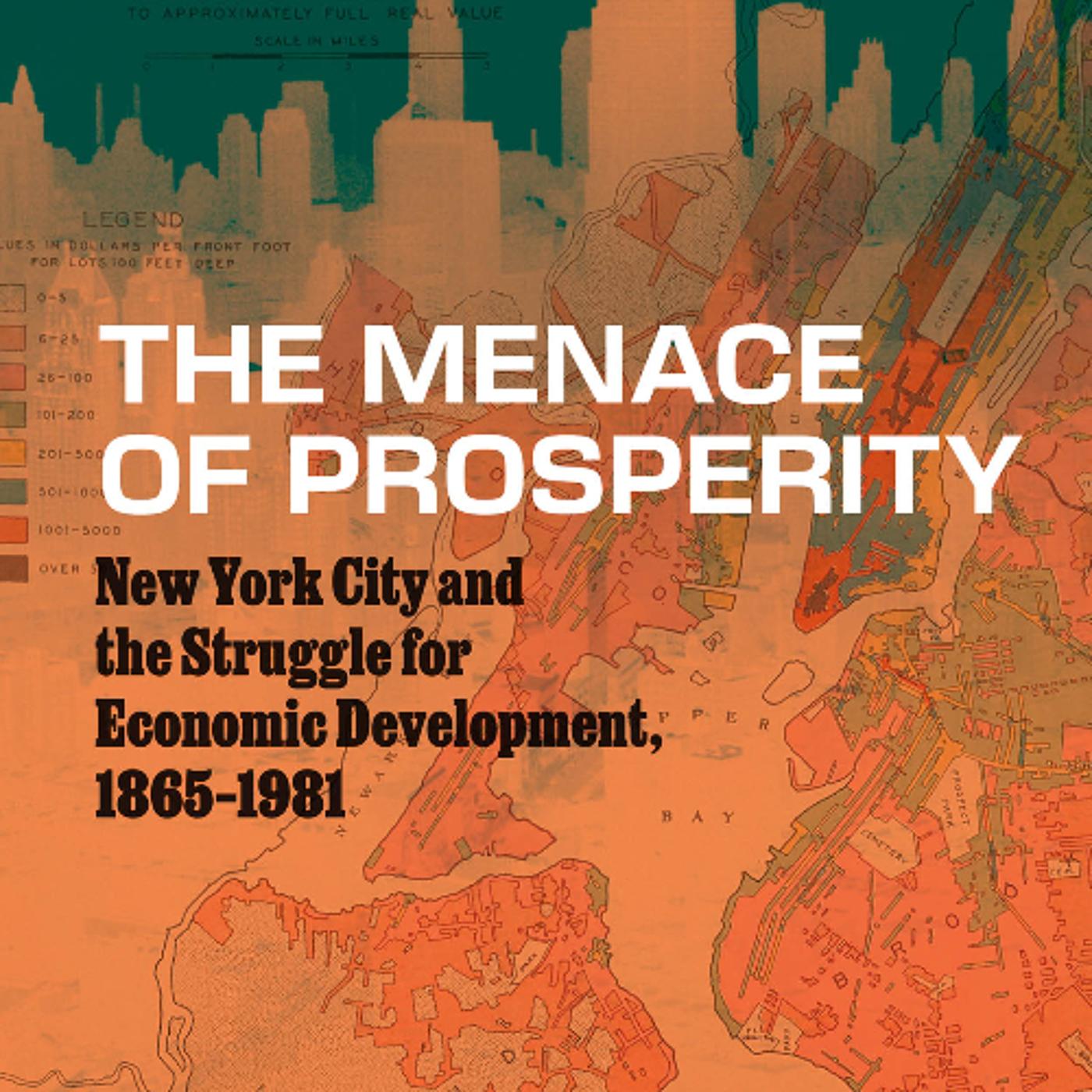
Does a strong economy serve the interests of the few or the many? The policy pendulum has swung in either direction over the long term.
In his new book, The Menace of Prosperity: New York City and the Struggle for Economic Development, 1865-1981, Dr. Daniel Wortel-London, visiting assistant profes…

From the 1750s to the present day, Salem Township in northeastern Pennsylvania has been a site of financial speculation and the social changes it sets in motion.
In her latest book project, Dr. Nancy Campbell, professor of Science and Technology Studies at Rensselaer Polytechnic Institute, uncover…
Geophysics, or the study of Earth using the tools and methods of physics, is often understood to have begun in the post-WWII period. However, the period between the world wars saw ferment and innovation in the field, and the emergence of the term geophysics itself.
In his latest research, Dr. Erik…

Images of bathers have recurred in art through the ages, and their depictions tell us something about attitudes toward human bodies, sex, gender, cleanliness, and much more.
In his dissertation research, art historian Jay Buchanan, PhD candidate at Washington University in St. Louis, analyses ima…
Disclaimer: The podcast and artwork embedded on this page are from Hagley Museum and Library, which is the property of its owner and not affiliated with or endorsed by Listen Notes, Inc.
EDIT
Thank you for helping to keep the podcast database up to date.
