

النص 🔗
Jeff McCallum: My guest today is Brandon Smith. Brandon Smith has been in the construction world for 20 years. He owns a construction company called New Vision Projects. I hope I got that right. And
Brandon: You did?
Jeff McCallum: hosts a podcast, Open Concepts, which is interesting. But you also help trades. Your personal brand is helping trades, helping young people get into trades. Is that correct? Or did I have that right?
Brandon: Sort of. Yeah, pretty close. So I mean my I I've been in the industry now, you know, I got into construction straight out of high school and I graduated high school in two thousand three. So it's been in the the construction industry now for I don't know what year is it, twenty twenty seven. So yeah, you're looking at about twenty four years and started the company about seventeen years ago. So twenty ten, we're about sixteen and a half years into business and started new vision projects. And construction did a huge amount for me in my life. And I was going through a a very dark time in in high school and I had a a learning disability and I was labeled with a learning disability. And it was my parents, my counselors, everyone that was basically all the people that you're looking up to as the the people that you should be, you know, should be beacons of of hope in your in your life. And all the people that you're told to, you need to listen to really, really well, because these are the people of authority and the ones that have the answers. And they were the ones that were telling me that I had this learning disability, of course. You know, ADD was a big buzzword and Ritalin was sort of the the solution. And I I my parents were splitting up at around the same time when I was fourteen, fifteen. And high school was really tough. And like it was it was this this place where I was falling asleep in class. Again, I was I was being led to believe that, you know, I wasn't gonna graduate. I wasn't gonna go to college. I I basically gave up the idea of of high school being a thing, like it was a fun social activity, but I ended up spending more time up on the mountain than anything. I fell in love with snowboarding and I I got into competing and fell in with a a a group of friends that were quite a bit older than me, but they were all professional snowboarders or aspiring professional snowboarders and So that's what I thought I was gonna do. And I I so I spent most of my years in in high school and most of my days in high school up on the mountain and kind of gave up on the idea of going to college, going to university. And then I was in I guess it was just turned 17, and my mom's house had burnt down, and she had moved into a rental suite, and I was helping her move in a bunch of furniture into her her new place. And the landlord of the house, he was a recruiter for a large construction company here in Canada. And he and we started talking and he said, Have you ever considered construction? Because we're looking for, you know, young, strong guys to come in and get involved in the industry. Yeah, yeah, please.
Jeff McCallum: Well, actually, can I interrupt there? I that that one's interesting because I we're jumping right in here and I appreciate that. Gave you the bio. You jumped right into your story, which I like, but one of the things that really stuck out for me is I reading that post about McDonald's. And
Brandon: Yeah.
Jeff McCallum: so I I think that one is because that McDonald's one's that McDonald's story takes you right back to that's like right at the beginning, is it not? Like let's d that one I I
Brandon: Yeah.
Jeff McCallum: What what's the deal with that one? Because
Brandon: So, Jeff, like there's a I mean, as you go, like there's a there's a a number of pinnacle memories that you have in this in this world and like and defining moments that you don't know at the time are going to be stories that you can tell and points in your life where you know things have to change or they're going to change, like these big moments in life and they're they're pretty rare. There's probably a handful of really big moments that people can remember. And for me, this was one of them. So as a You know, as as I was going through this young, young stage, I knew that I always wanted to work. Right. And and one of the things that I would do with in in high school and I had these friends that were snowboarders is I would have pop up sales at our cafeteria, right? I would get I would get snowboards and stickers and bindings and keychains and all the sort of stuff that I would get. It was like all secondhand gear. and and swag and I would do pop up sales in our cafeteria and like and sell a bunch of stuff. And but I I I wanted to work. And I felt like this was gonna be an opportunity for me to prove to myself and prove to, you know, my family and and prove to, you know, my teachers that I could I could go out and get a job and make money and I wanted some independence and some separation from it all. And so I went around and I was fourteen and I handed out flyers. I I wasn't quite fifteen yet. And to a number of places that I wanted to work. And I one of the places was McDonald's. They accepted my resume. And they hired me on. And I was super proud. And I went home and and I told my mom and she was excited for me. And you know, that I'd gotten this job and I gotten hired. And I didn't make it past my three month probational period. And I was fired shortly after being hired. And I remember going back and and af after being fired. I was hired at the exact same time as another guy. There were two of us that were on board the same day. Both of our names were Brandon. He went on to go on and be a manager of some sort at at McDonald's and was there for a number of years. And I was fired. And I remember walking home from McDonald's. And I I remember walking back to my mom's place and you know, all these things were gonna were running through my mind. I was like I I had tears
Load full transcript
coming down my face and I was like shit. I'm just like Who am I if I can't make it at McDonald's? Like this is the this is the one place that everybody should be able to make it. And I started making up all these excuses in my mind, right? What was I what was I gonna tell her? what did I think of myself? Like how was I gonna go back to school and like and tell these kids and my peers that I was fired from McDonald's? Some of them worked there and and some of them knew that I was fired and it was a it was a weird, weird time and
Jeff McCallum: That's actually interesting. The reason I brought that up, sorry to interrupt, is because it's hard to get fired for McDonald's.
Brandon: As far as I know, yeah, there's like there
Jeff McCallum: You know, as far as I know, and it's like I've had my nieces and nephews that have worked there have done really well managing and it I can relate to your story in that I suffered for the same thing in school. I they didn't call it I don't know what they called it ADHD, but
Brandon: Mm-hmm.
Jeff McCallum: for me, I mean yes, I graduated, but I think about your McDonald's story and I think about when I worked at Burger King. I
Brandon: Yeah.
Jeff McCallum: was there four days and I quit. But anyhow.
Brandon: Okay. Yeah. Yeah.
Jeff McCallum: Yeah, so you i I just I wanted to bring that up just because hey man, that is real kick in the pants. So here you are, you're f you're fired from McDonald's.
Brandon: Yeah. Yeah. So I was I was let go from McDonald's. And that was the first it wasn't the first time that I that I felt let down, or it wasn't the first time that I felt like I hadn't accomplished anything or I wasn't gonna accomplish anything. It was one of many things that had sort of compiled, but this was one of those one of those moments where I was just like, Well, this I am clearly not cut out for this world to do anything. And I yeah, I ended up going home and And I just I told my mom the truth and just said, Look, I've fired, I I don't know why and to this day I still don't. I just know that I I wasn't McDonald's team material. But they didn't really have to give me a a reason at that time. I was still in my probational period and they let me go. But it wasn't like I was doing anything that I thought was bad, but I I certainly remember, you know, sending out a few batches of frozen fries 'cause I couldn't get like the timing and the and the beeping right and that was, you know, there was a lot of stuff going on and I wasn't the fastest at the till and I couldn't like I didn't know where all the buttons necessarily were and whatever. So like yeah, like I
Jeff McCallum: Yeah, yeah.
Brandon: I I I maybe wasn't great, but I didn't think I was that bad. But yeah, I was I was fired and I went on. I you know, spent a a couple of years at Little Caesars Pizza and to totally redeem myself. And that was that was a fun place. There were some, you know, friends there that had had work in, but I I got pretty good at at making pizzas and and I you know I learned from From my McDonald's time as well. I was like, man, okay, well, Little Caesars is taking a chance on me here. So I really gotta step up my game and and take that a lot. But it was you know, and then I got into to delivery driving. And that was a funny thing. Like my first car, man, it was I think it was an eighty one. It was an eighty one old Oldsmobile cutlass, right? A two-door, like real gangster looking thing.
Jeff McCallum: I had a cut list too.
Brandon: Yeah. And so when you're delivering pizzas in a in a cutlass, like it's For those of you that don't know, like it was a peg on gas, right? And and we would get paid, I think it was three dollars per delivery. And so you would and you weren't working at the store at the time. So you'd be on call for deliveries. They'd call you in, you'd go, you pick up the pizzas and you'd go and you'd you'd drop them off. And you'd hope that you'd get some tips. And so I got into this this position where now I would sometimes I get two deliveries, three deliveries a night. So like all I was making was, you know, ten bucks was what little Caesars was paying me to deliver pizzas. And this was also at a time where like you you don't have a GPS in your car. So like the y you you need to know where you're going. So you go in, there's a huge map of the whole town that's like plastered on the side of the wall. And you have to get the address right and you would write down you know, by hand where you were going and turned left here, right over here, left over here, this call the sack, this number. And so it took it took a long time to to get pieces. So you know, tips tips weren't great. But I, you know, I was also at that point, I had you know, I'd started understanding what some of the customers liked and what they wanted. And some of them, you know, they would want a a joint here and there. And some sometimes I would like I would show up with a little something for them as well. And I would get a get a bit more of a tip and
Jeff McCallum: No, listen, that's funny because he was talking about he was
Brandon: that was a that was it was a blip in time.
Jeff McCallum: talking about that today, adding value. He goes, you know, when I Dan Martel, when he says, you know, I dropped my car off today and the the young the clean the young detailer puts a bottle of water in my dash
Brandon: Yeah.
Jeff McCallum: cup holder and he goes, you know, that just made my car that much more special because you're talking about over deliver, right? So I get what I get what you're saying. Pizza, bring me anything.
Brandon: Yeah. Yeah. So bring me anything. Bring me anything. But I like it. There was a couple of regulars, right? You and you know that they they would order pizza, like you the same guys like same night. It was like Wednesday night and Friday night was pizza. And so you show up at their door quite regularly and then you just you start talking to them and then you you realize
like, Hey, you know, you can you deliver anything else? It's like, Yeah, I can I can, you know, I can find you a joint, I can find you some wheat, whatever. And so you know, bring that in. And it was it was a it was a it was a funny moment. It was a funny blip in time and and it it it lasted not all that long, but
Jeff McCallum: Well you know, can I I I really love this because it reminds me of there's a a friend of mine lives in San Francisco, his name's Manny Fernandez, and he always tells the story about I don't know if you know who Manny is. He was one of the sh on
Brandon: I don't know many, no.
Jeff McCallum: I think he was one of the first Hispanics on Shark Tank or something. Anyway, he's
Brandon: Okay.
Jeff McCallum: a Silicon Valley investor, mortgage guy down there too, buys and sells real estate. But he's really he's also a boxer. But he he
Brandon: Mm.
Jeff McCallum: talks about One of the things that changed his life was he was delivering pizza one day. Gets to the door, big house, beautiful place. And the guy, he knocks on the door, and what did he say? Something about Manny said to him, He said, You know, what can I what can I learn from this owner? He's looking at this big mansion, he's delivering pizzas to him. And and the guy says, You know, what are you listening to right now? In your car, what are you listening to? And of course, Manny goes, Well, Rap music, right? He's listening to rap music. And I think what was it? Was it Think and Grow Rich? That he picked up that cassette and that changed his life. He stopped listening to rap, and that changed his life. That right there, that was one of the moments that and I love stuff like that. And it's like even you with the McDonald's pizza, it you're you're starting to sound like. Successful people have these traits. They're scrappy. They do anything to make it work, right? A lot of people nowadays want things handed and I'm not gonna get too hard on that, but I'm from old school. I think you are too. And
Brandon: Well, I'm I I'm s I'm still scrappy to this day, Jeff. Like I you know what I mean? And and
Jeff McCallum: Yeah, you have to be, man.
Brandon: it's there's a lot of that that I I took with me, like for for better or for worse. And I'll you know, I see these kids online and they're just, you know, they're flaunting, I'm I'm automating my life and doing this and it's, you know, making a ton of money and and I I get it, but I I d I came from that world where like you had to get scrappy. You had to you had to figure stuff out. You had to you know, you had to think on your feet, you had to make decisions that in in the moment that were either gonna serve you, but sometimes they were a crapshoot. It was like in in this case it was either gonna serve you really well or like you might end up in jail. And in that point.
Jeff McCallum: You know, I you know, I I love what you're saying because I just listened to a podcast yesterday from Stephen Bartlett and he had Dana White on there. Now, I don't know a a lot about Dana White except UFC and this and that and Trump and all the other. But I really agreed with what he said. He was right in there talking about what we're talking about. And I need to hear that more, and I think more kids need to hear that because when you think about how many people actually make a lot of money online, there's not as many as you think. And if they do, it's kind of one time. And I'm not, hey man, I'm not here to poo poo the idea that you can make money online, but it's like anything else. Listen, man, I had my youngest son was in hockey. Was he gonna go to the NHL? Maybe, maybe not. But it's an anomaly, I think. You you cannot beat that scrappy attitude. You have to have the man, he put it well. That was a really good podcast. He he says, he goes, There is no yesterday. And I've talked about this with other friends. You know, you you gotta don't look in the rear view mirror, man. It's only that's why the window in the front of your car is bigger than the little one that you look out in the back, is because you don't have time to, you know, look at excuse me, look at your old story, make excuses, be a victim, all the above. Excuse me. Anyhow, I digress, but I just I
Brandon: Well, I I I agree with ya and and you know what Dana's like what I love about Dana is he is very much like he's very involved. Everything from the the high the highest level as far as the the business deals that he's putting together with Paramount, right? He's putting like he's he's competing now with these like massive, massive organizations, the NFL, the NBA, NHL. Like he's he's fighting for prime time in here. So he's at the table with these, with these really intelligent people that know what they're doing. And he Is still at the front of the line talking to the fighters, right? Like he is the one, he's he's there, he's getting to know them, he understands who's gonna make it, who's gonna not, who's who's gonna get the contract and who's got that, who's got that grit. And not only like can they fight, but do they have an entertainment value to them? And and so he's talking with these people and he's and he's so involved with the fans as well. Like he's very involved with the customers, right? Every single UFC event.
Jeff McCallum: man. All fans, he talks about love that.
Brandon: It it is and like he's you know, UFC now is, you know, the twenty twenty plus years into the into the game, like he's been he's been running this organization, but every every event that goes on, like you do you feel it and they're and that It is designed very much for the fans. And that doesn't come from not being scrappy. Like that doesn't come from sitting in a boardroom and only listening to the exec the opinions of the executives. Like, no, like you're on the you're on the floor. You're getting the hearing from the commentators. You're hearing from the fans. You're hearing from the fighters. Like you're hearing it from the front lines.
And and I have a huge amount of respect for Dana in and what he's been doing in that organization because he's he is that and he's he's he's got that he's got that grit and and wholeheartedly
Jeff McCallum: You know, he I I pulled so much out of that yesterday. And because again, you can listen to so many different things on podcasts, and boy, they can influence you. He it just he was so down to earth, and I really loved one thing that he did say. There's that there's that that information out there that says, Hey, work at home, work at home. But he goes, No, no, I like to be in an office.
Brandon: Mm-hmm.
Jeff McCallum: And I understand that because I was always in an office when I was building my companies, like yourself, right? And it goes, that's where, you know, you've got the an employee comes in or a supplier, whatever, and you get these conversations going. And that's where the real juice comes from. And, you know, at the end of the day, you're sitting around with employees or you're sitting down again with suppliers and you get to understand what's going out, what's going on in your industry, as I always put it, what's going on on the street. As I got bigger in my companies, I would be working from home. But every time I went to the office, the different locations, it just my hair would be on fire. But
Brandon: Mm.
Jeff McCallum: my point is, I could phone them up, the staff, and go, hey, you know, what's the word on the street? I used to use that all the time with the administrators and some project managers, right? And I just, but his point, Dana's point, was like, go to the office, be there, be part of it. And especially when you're building, man. And even now he's building. He's 57, he's still building. I chose to sell what I was doing at 59. Fine. Now I'm on to something different. But it is interesting to me, man. It's like I I guess the the underlying thing here is it's hard, hard work, man. Putting a business get together is hard work. Now, getting to you, I see you've got the podcast, you've got the You're busy building homes, custom homes for everybody. And that's not an easy task, though your customers are a pretty happy bunch, you know, until things go sideways. But and then also you've got the trades, is it trade school?
Brandon: Trade up coaching. Yeah, is what is what
Jeff McCallum: Right.
Brandon: we're we're calling it. Yeah.
Jeff McCallum: But you got three you got three SKUs on the go, man. How do you do that?
Brandon: Three skews. But you what it it goes really well. I have a I have a great team and one of the things is is here, man, like in in the the coaching side of things, I have cut it down to the absolute necessities that these folks are gonna need, right? I I see trades and you know, I I understand what construction did to me. You know, maybe I'll I'll get to the trades in a in a in a in a moment here, but I do wanna reflect back on on Dana's comments there and in your conversation,
Jeff McCallum: Go for it.
Brandon: because I think as soon as you step out of the arena that you're in, right, you start to lose touch. And that's one thing that I I think is is being lost right now is the the time being spent in the arena. Like if you're building a company and you're and these kids that are, you know, 19, 20, 21, 22 that you're seeing online and they're, you know, flaunting that they're making millions of dollars online. I think that's incredible. But I also think that they haven't learned the the skills that are gonna be necessary to to maintain that. And like you talked to Dana, like what's or any fighter, right? What's what's more difficult? Becoming a champion or staying a champion. And there's only a lifetime there. And unless you've like really honed the skills of staying a champion and you're constantly working on getting better, then you you tend to rest on your accomplishments. And somebody else out there is going to come after what it is that you're doing. You're going to start losing market share. You're going start losing touch of the people that are there to help you help you build and help build with you. And
Jeff McCallum: Absolutely. Yeah.
Brandon: so for me, I think that there's a lot of value of staying in the arena as long as you can. And if you have to step out of the arena, you're staying as close to that as you can. So you can still, you know. feel the sweat, feel the heat, like you you're still involved to to some degree. and and that's how you make change fast as well. Right. And I think this is one of the in the in the world that we live in right now, especially with AI, things are moving very, very quickly. Decision like the way people consume marketing, the way that they consume content, the way the things that they value, that that you may be able to offer as a company, as an organization. It it changes so much, especially you know, when I look at one coaching company that I had started with, and this goes back, I was a their second ever client, goes back twelve years ago probably. And they one of their biggest things was they were helping you build standard operating procedures. And one of their biggest selling points was like, hey, you have a company we have all of the processes that you're gonna need. So you don't have to go out and think about it and build it like we have all of these templates you can use. Well now anybody with a a a Claude account or a chat GPT account can start building stuff pretty quickly. So all of a sudden what they were selling as the most valuable part of their of their business is no longer valuable. It's just becomes a a a commodity. And so you have to be in like in business at the speed of which things are moving. you have to be able to pivot and move quickly. And you're only able to do that if you have really if you're paying really close attention to what's happening on the front line because they're the ones that are going to have the the most information or the most valuable information
that's going to allow you to make those decisions. And so
Jeff McCallum: But it's funny, I s hang I want to stop you there for a second.
Brandon: Yeah.
Jeff McCallum: I find that one to be interesting because there's two things going on here. It's like Dana White is saying when he's in his when he has his companies, he's in there like a dirty shirt. He's on he works a lot of hours. And there's also the other side of business where, you know, I spent a lot of hours in the office and I did those after hours. Where I'm sitting there having a beer with the guys and I was very much into like I early on in the company we set up something called the mosh pit at eleven o'clock every morning. Similar, I got it from Brian Scootamore from one eight hundred got junk. You
Brandon: Hmm. Yeah.
Jeff McCallum: know, we're gonna talk about the wins. It's not a safety meeting, it's not, you know, it's we're gonna talk about wins. And so that really opened up the staff and so forth. But my point on this is there got to be a point in the business where I didn't need to be there at all. That is when I came up with that term. I quit 10 years ago. I didn't tell anybody because it was running without me. And when I sold the companies, I got paid out. I didn't even they didn't need me. So, so there's that part of it too. It's like you you're right. You build the business, you gotta be on, you gotta be on, you gotta be in the and there there's so much gold in what you just said, especially when you went back to, you know, a lot of the young folks. You're right. Kids peeling off dollar bills, showing off their Ferraris and so forth. It's yeah, there's a lot of money out there for kids, but there's that those scrappy jobs that you listen. People say, Do you have any regrets, Jeff? And I go, Yeah, I should have gone to university. And the reason I say that is because when you're young, your your brain's developing till you're twenty five. And you should go to university just so you can get social skills, learn how to, you know, cook craft dinner on a heater. you know party, figure social
Brandon: Yeah.
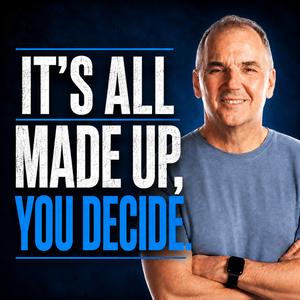
Jeff McCallum: skills out, go to university, and even if you don't, I don't know, there's something behind. I see what my kids had three go to university and their mindsets are completely different. They can put a they can speak, they can. I just think that that was missed opportunity for me. Yeah, it all worked out, but there's so many ways to skin the cat, hence the name of the show. It's all made up, you decide, right? You have to
Brandon: Well it is all it is all made up and I mean this is the the thing too is y like Everybody has a different idea of what success means to them. Everybody has a different
Jeff McCallum: Yeah.
Brandon: idea of what they want to do with their business. Some people know that they're building a business because they want a lifestyle business. They would they know, like, all right, we want to fully automate it. We want to keep it small. We want to
keep it simple because they want to be able to travel, you know, four or five months of the year and still like keep keep tabs on what's happening. And that's, you know, one way of doing it. Some people want to build something massive, like Dana White, right? He's he's building something absolutely massive. And that takes a lot of time and attention. And so you have to be clear on on what it is that you want to build. And you know, and and a lot of people do, right? They they want to sell their business. And not necessarily because the business isn't working. It can be working very, very well. But they just may say, This is a great opportunity. The market makes sense. I'm going to sell it. I have some interesting interested buyers. They're willing to pay me a lot of money for it. And this is gonna give me the opportunity to go and build something else and and work on something else that I want, right?
Jeff McCallum: Yeah, no, absolutely. That's I think you're a little bit like that. It's like you've got your construction company and the fact that you're even doing the coaching and podcasting on top of what you're already doing. I mean, it's a lot. What does your family think you do? What do your kids what do your kids think you do? I know you probably
Brandon: I like my kids are pretty young and I have my my oldest is five and my youngest is sixteen months now, right? So there's a they're
Jeff McCallum: wow.
Brandon: they're all they're all they're pretty young and they just know I go to work. My my daughter thinks that I build houses. Like that's what she knows. And I it's hard to explain to her everything else that I'm doing and so I just keep it very simple. you know, I build homes. But the you know, I I understand too what I wanna like what I wanna do with the construction business, but also where I wanna take and and focus my attention over the next thirty years. Right. I'm I'm forty years old right now. And if I'm blessed and healthy enough to work until I'm seventy and eighty, then I know I I'm only gonna get so many big swings at something and I wanna be able to wake up every day, work with great people. And build something incredible, build something bigger than I thought I could ever build. And I'm not going to be able to do that on my own. I'm only going to able to do that with great people. And you also have to be realistic of understanding is the vehicle that you're is the vehicle that you're currently driving, is that going to be the suitable vehicle to help you get to where it is that you want to go? Is it going to, is it going to help you achieve the things that you want to achieve? And you have to understand that as well, right? So if you have For me, I have ambitions to build you know one of the world's most renowned acquisition companies of trades and home service businesses. I know that. I know that the the vehicle for construction has got me to a certain point and I love that and I love construction. I do. Do I wanna just cut
the company off and decide that I'm gonna pivot entirely and do something else? No, like I wanna see it I wanna see that survive, but there's certainly things that need to be put in place in order for that to become, you know, still stay a part of my life, but needs to be handed in handed in handled in a way that is gonna that's gonna make sense. And one
Jeff McCallum: One feeds the other, really.
Brandon: one really does feed the other. And and it and it and that not there's anything wrong with it. People can build billion dollar
Jeff McCallum: Absolutely.
Brandon: construction companies. No problem. There's there's like multi-billion dollar construction companies out there. But it also you also have to ask yourself, is Is my heart in it to build a billion dollar construction company focused on this? Do I love the industry enough? Do I love it this much that I can I can build and just focus on on building this one company? And I I really do love trades. I love the construction industry. I love the people involved in trades and and you know what what the industry was able to do for me. I mean, it's funny you talk about college and university. I never went to university. And I I went I started an apprenticeship. I got hired on at this at a construction company and and I walked on to a brand new job site at at seventeen and I I pushed a broom and that's where I started my first handful of months. And about month four or five, I was asked by the foreman that I was working with if I'd ever considered starting an apprenticeship. And this was, you know, this is right after high school and I didn't know what an apprenticeship was. But he said, you know what, you you you work for the year you go to school for six weeks. And after four years of doing that, then you get a a Red Seal certification and you can make more money. And this is, you know, what you're doing. And I said, yeah, that, you know, that sounds that sounds great. Let's sign me up. Where do what do I do? And so I, you know, at that point, back, you back to the McDonald's story when I was I was down on myself and I was going home and and telling my mom that I had been fired from McDonald's. I at that time I was like, this is one of the first times I again in a long time where somebody f saw something in me and I was able to go back and and say, look, like I was offered an apprenticeship. This is a huge opportunity. Like I'm I'm starting to make some progress here. And I went down that path. And working for that company was was great. And I started saying yes to more and more things. And they gave me more and more responsibility. And like pretty quickly I found a place where I could start to add a lot of value. And in 2010, the Olympics came and basically construction in the Vancouver area just shut down for a handful of weeks and a lot of people were laid off. And this was after the, you know, the 2008, 2009 financial crisis. And I was, you know, we were we had a a lot of layoffs at that point as well. And I I remember I was working on a hotel and we had finished building the parquade and we were just about to start building the hotel portion. And my foreman at me at the time He came in and said, Hey, like we're we're stopping. We're sending all of the equipment back. like bored everything up and like we're laying off a bunch of people. And I I fortunately I stayed on. They kept me on and you know, right till the to the bitter end. And then in two thousand ten, we were sort of through that. The Olympics came, everybody was laid off. I I was laid off for about three weeks and then it came time to go back to work and they said, you know this is where we want you to be. And I said, thank you very much for this opportunity, but I'm gonna use this now as as an as a launch pad to go and do my own thing. And but you know, starting in construction, it gave me the opportunity that I thought I never had, which was I I was able to save up enough money to to buy my first place at the age of twenty two. And I was the first graduating student or first high high school student of my graduating class to buy a home. I was the first homeowner of my graduating class. And I bought my second at twenty-three. And this was something that coming from a kid that I didn't think that there was a hope in hell that I had any sort of future was able to do. And I would I wouldn't have been able to do that without being in construction and without getting the opportunities that I had to work at this at this company and save some money. And you talk about books. Like I read Rich Dad, Poor Dad, and I I, you know, learned the idea of saving ten percent of everything that I earned and The company that was working with, they matched, you know, three and a half up to three and a half percent of whatever I put away into RSPs. And so I was saving that, you know, 13 and a half percent of everything that I was making. And that worked out to a pretty nice down payment for a, you know, 22 year old kid. And over time, like what I what I understand though is like trade school, I I fell in love with learning again. I fell in love with math. I fell in love with like I could start a To realize what these concepts were and why we were using them and how it was going to help me in my in my real world and and in my job and help my career. And I'd never had that before. And so what I realized after, you know, now 17 years in business is trade school is great, but it doesn't teach you shit about running your own company, ro running your own business. And I I know now with the experience that I have and I see so many, so many guys getting into business for themselves and they're excellent tradespeople. They're really great at what they do, but they're just terrible at running business. They don't know they they don't know an anything about financials, they don't understand marketing, they don't understand, you know, building an organizational structure, hiring people, how to do that
properly, or in sequence. And so there's a lot of stuff that they that they don't understand. And so what I wanted to do was I wanna focus on building other trades businesses. I wanna be able to to coach people, coach trades businesses on the things that are really gonna help them move the needle. Not just like some Yeah.
Jeff McCallum: When you say trades, can I jump in? So
Brandon: Yeah.
Jeff McCallum: are we talking any trade? Are you talking construction trade? Because there's the service industry, right? Which is HVAC and roofing and well, roofing's
Brandon: Currently Yeah. Yeah.
Jeff McCallum: probably in the construction, but yeah, what it w when you say trades, which ones are you talking about? Anything in particular? Any trades in particular?
Brandon: Yeah. So we're opening it up pretty quick to any trades. The founding members
Jeff McCallum: okay.
Brandon: are all in the in the, you know, home home renovation, repair, remodeling space, just because that's, you know, what I know inside and out. So we've launched the program. It's only about five months old. And those are the first members that we were able to to bring in. And we we are opening it up. pretty quickly to all other trades and that's where building on the on the back end as well is just how to service these trades. But a lot of the stuff is it's it highlights like the most critical points in in people's businesses and what they need to remove from their business in order for them to to get past where they are currently. And so I don't want to build you know, here's just a a three month course of videos on how to like theoretically build a a trades business. It's like, no, I want to, you know, back to the like getting in the front lines. We're we're opening up like some real tactical stuff here that are gonna solve real problems in your business and allow you to move
Jeff McCallum: Flow.
Brandon: forward and do all yeah, absolutely. Like if you need to under all those goodies and
Jeff McCallum: All those all those goodies. H HR cash flow, you know, I love those. I I
Brandon: Yeah.
Jeff McCallum: do some consulting now with some companies and that's why I asked with what trades and you know, everyone said I should have gone and done the r you know, I should have I should coach the restoration industry, but yeah, you I you can ask me that one later when if I'm on your podcast at some point and I don't have the energy to go through that one, but
Brandon: Yeah, well we'll we'll we'll get you onto the show.
Jeff McCallum: But the restoration's great, but it's not like it's not a normal business. And I I was thinking about you the other day when I was saying, Well, I'm gonna interview Brandon and and I and I thought, here's Brandy, you've got a business where people are happy to come to you. Here's my blueprints or here's here's what I'm thinking out for a house. And you build them this house and they're happy and it's their dream. And with restoration, it was always, you know, how
can I how can you rebuild my house, Jeff? make a silk purse out of a sow's ear type of thing, you know, and somebody else paying for it. It was a a little bit and besides they were traumatized. You know, these people, when you have somebody in a fire, it's anyway, I'll I'll leave that for now. But I was laughing about that the other the other day, thinking, you know, that's part of the reason why I don't consult in that. It's it and and again, like small business, a little Like trades trades guys, you nailed it. The the guys I talk to right now that are and this would be great for me to re be able to refer you to some of the people that approach me and it's like, yeah, dude, you've got cash flow issues. Well, I don't know how to deal with the bank and I don't know this and that. Meanwhile, he's making hand over fist. When I say HVAC business, I just money lights up in my brain. HVAC businesses are worth a fortune. A friend of mine sold his for a lot of change because somebody bought them geographically, right? Private equity. Anyhow, and yeah, that is that's exciting, that aspect of it, because there is more people like you are needed in that industry. We need to guide the trades. You're right. Get a guy, g you know, get into the trades, sure. Figure out, you know, you're you're really good at your trade, but like as you put it, the business side, and it's always the case. You don't, you know, you don't take my last interview, actually Jonathan's dad. He's a he teaches business at University in Kelowna, sh sharp guy, you know. And it's, man, you can be an armchair critic and know everything about business, but unless you're out there getting beat up scar tissue. And I always say, you're not an entrepreneur until you wake up at three in the morning and worry about payroll. By five AM, you're destitute on the street eating craft dinner. You know, that's where your mind
Brandon: Yeah.
Jeff McCallum: goes, right? And it's like if you don't have the proper people around you in the tool. Anyway, carry on, sir. So here you are. And I want to just dive into this the idea of you running these three different things in your life and you in parallel with you know growing your family and you said 30 years out. That's such this is such good information because first of all, you know, when I said one feeds the other, it's and I can only use mine as an example. I always had ABK restoration and I as you know, I had it what, 30 something years. And in That time I was feeding other things. I had the publishing company with Bob. You know, we're teaching people how to self-publish. And then we had we formed Norhaz. And Bob and I also had a franchise company. And it was so fun that ride. But I my point is it was hard work putting the restoration company together. It was hard work staying on it every day. And I think that has to be the message. It's like, yeah, okay. You want to go do a side hustle and get rich? How about have some cash flow coming in? that means you
have to you might have to get off your ass and go to work. You might have to go do a job you don't like. And I I need to beat that drum more because it and actually just watching Dana White yesterday got me more pumped on it. Because sometimes I put content out, it's not really the content that I really want to say. I can give you the the ins and outs of how, you should go to the bank. And and I do that with my content, but sometimes I just want to slap people. Now that, you know, I got to bring that down a notch too. But That to me is what people want. They want accountability nowadays. They're not gonna tell you that, but they want it. So anyhow.
Brandon: This is the thing is like we live in the we live in this world where information is abundant, right? So information you can get anywhere. Like I, you know, you you wanna figure out how to, you know, change the door handles on your 19, you know, 65 Volkswagen, whatever, like you're gonna find a YouTube video of some guy doing exactly that and breaking that down. Like information is out there, but people with with coaching, like they don't. They don't want just information. Like they they want to know that somebody's there in their corner. They want to know that somebody's gonna stop them from making the decisions that they're about to make. And everybody believes that their situation is incredibly unique to them and they want some guidance on on what to do, what not to do, how to handle that. in real time and they want that done quickly. And so people want and people want coaching from people with credibility, people that have have some experience. And so it would be an easy thing for me to do to say, you know what, I'm gonna get out of the company and I'm gonna just focus on consulting. Like I could build a a banger consulting business, no problem. But it's not gonna keep me sharp. And I and I
Jeff McCallum: No. You know, that's part of what I miss. I do miss that. Sometimes I miss that being in
Brandon: Mm.
Jeff McCallum: the game and being on fire. But then I pull the reins back. Cause you know, I always say, I
Brandon: Yeah.
Jeff McCallum: always say, you know when you turn 40, you know when you turn fifty, and you certainly know when you turn 60. Your mindset
Brandon: Yeah.
Jeff McCallum: changes. And something Dana said yesterday, which I loved, I'm using him a lot in this podcast, probably shouldn't, but he said, the older you get, the softer you get. And it
Brandon: Mm.
Jeff McCallum: doesn't mean You know, what he meant by that was the older you get, the more problem solving you've done. So you don't freak out when a problem happens. And I I think about that. I know that being the restoration company, because that type of business, you're always 12 steps ahead of everyone in your mind, right? Because you're already waiting for them to call you and complain. And all the other businesses that I had prior to the restoration, that helped me learning how to deal with customers, learning how
to. And y it's scar tissue. You know, and again, the other part of turning 40, 50, 60 is your energy changes. You know, I could have a nap in the afternoon, no problemo. Right? Your body, and I and I work out like you. Speaking of which, you're a gym guy. Are you still
Brandon: Absolutely. Yeah, yeah, yeah.
Jeff McCallum: are you still with the coach?
Brandon: yeah, so I've I think you're referring to Alan there, but no, I'm not not yeah,
Jeff McCallum: Yeah, coach Alan Dick.
Brandon: I'm not working with Alan anymore, but he like he's been great. I mean he was one fitness has always been a a huge part of my life, but he was really the one that really helped me dial in my my and my understanding of my macros and how that's gonna play
Jeff McCallum: Yeah. Yeah.
Brandon: a place. And and and right now I'm I'm very much in a place where I'm glad like that was incredible money spent on finding a fitness coach, somebody that you can just to help
Jeff McCallum: He's
Brandon: you like
Jeff McCallum: good.
Brandon: in that in that realm because it it you understand like I always I shouldn't say always but most of my life I've I've eaten clean like always tried to eat eat healthy do this but you never really understand like the the amount of nutrients that you're getting and so now when you dial that in your head and you know where you're at with the with the amount of protein that you've had in your in your day or the amount of fiber and carbs like you can you you just know where you are within your macros towards your goals. So it gives you a better understanding of like which knobs you can you can dial and and and you know that kind of ties back to your conversation about about age and like what I I believe that that comes with experience. And you know that the the things that drove you nuts three years ago, four years ago, if those same things, those same problems came up, you would know how to handle them because you now have a playbook for that. You have the experience for that. So you're not flying off the handle, running
Jeff McCallum: Yeah, yeah.
Brandon: to the phone, doing the thing. You're like, we've kind of been here before. So I I know how this story is going to play out as long as we do these few things. And that and that comes with experience. experience and it it it just means that you're you're gonna hopefully have the opportunity to solve bigger problems that you know that you hope for in in business and in life and you hope that they're not major problems, but they're different problems that you get to solve. And that those are the things that are gonna light you up. I I'm I'm going through one situation right now I've never been through before, but I know like I've been through enough in my in my past, you know, solving these sets of problems that I've been literally been able to figure everything out and been okay on the other side of it. And so I know whatever problem I'm coming up right now, as long as it's not life threatening to
my family, life threatening to me, something Like I literally can't solve if it's in my control, then I'll be able to find the resources that I need to solve that problem. And that doesn't come without experience. And that doesn't come with
Jeff McCallum: Well, li listen, that you know what you so the the whole idea the reason I brought up the working out and it's something Dan Martell says, you it's exhaust the body, chain the mind. I absolutely love that quote because when I work out, settles my brain. If I knew If I knew how to work out when I was younger, if I understood that concept, of course I didn't. I was a guitar player and you know, it was the 80s and 70s and 80s.
Brandon: Yeah.
Jeff McCallum: And if I would have understood that early, I probably could have curtailed some of my own ADHD, if you will.
Brandon: Mm-hmm.
Jeff McCallum: I probably could have been more settled and clear and so forth. And it's like you you think about what you're doing. Why we're we're sitting here like it Talking about, who's your, you know, you've hired a personal assistant. Most people don't go there. Most people don't pay for that. You know, they'll want to sell you something like that, but they won't pay. Anyway, that's another story. But that's the difference right there. Is you're successful because of that. A little tiny thing is hiring that trainer. Why? So that you can have the energy to think, handle the business, look at things differently. But I think the big key here is looking at things differently. Most people can't do that because they get stuck in this victim, not even victim, it's well lack of information. And again.
Brandon: Well and I think people choose I shouldn't say all people, but a lot of people they choose security and comfort over asymmetric risk. And so what I mean by that is they will here's the opportun like here here you can work out, right? You can anybody you take two people you tell them, all right, here's fundamentally like you can go work out, eat better. The one person that doesn't see results knows that they they can eat better and work out and exercise, but they don't have anybody to keep them accountable and to show them the path on how to do that. And, you know, in person number two over there says the exact same thing, but they're like I'm gonna spend some money. I'm gonna drop, you know, a a few thousand bucks or whatever that's gonna be. And I'm gonna give up, you know, my budget for going out to restaurants or buying beer or whatever is gonna it's gonna be. And I'm gonna start to make this a priority because I wanna put it in a priority. And the things that you start putting money towards in your life start becoming a a priority. And so the, you know, the downside is you lose a few thousand dollars because you decide to not do the work. You decide to not work out and decide to not change your diet and your health. The upside, however, is that it it changes your life. It changes who you are. It changes who you show up to be. It changes your energy from who you you know, who you were to who you can possibly be to lead your team, to show up at the end of the day and be present with your family and you know, get up early and do it all over again and it and so like the the asymmetric risk, the upside far outweighs whatever the possible downside of that could be.
Jeff McCallum: yeah, 100%. It's just another, it is a habit of, you know, high-level entrepreneurs. And I realize that now. And I and I wonder too if, you know, this is gonna sound strange, but would I have sold the companies? Probably. That industry again was a tough one, right? I probably would have sold, but part of me wanted to keep the second company just because of what I know now. Really, I just needed a break. And I think. even yeah. Yeah, I probably would I because again, it's do I wanna go and build another service industry or service company? No, but could I and could it be unbelievable? Yeah, probably, just because of the tools I have now. Because I've stepped away from it's been six years since I've stepped away. And it's been good. But it's been a big
Brandon: Yeah.
Jeff McCallum: a massive learning curve, like it's beautiful, right? You're constantly learning new stuff, hanging out with new people and so forth. But and and I was just gonna say on this, you know. You're right. You got what you, you know, he changed your life, Alan. And then it was time to walk away because you could be, you know, you could bring yourself up. Your standards are here. You he helped you bring your standards up in the working out and understanding of how to work out and the food nutrition. But there's a there's gotta be a time where you just walk away and do it yourself. And that's the same thing with being coached by Dan. Right. I I met you in Dan's thing. That's we're still in Dan's elite. I joined for a third year. will I go next year? I'm not sure. But probably not. It's like there's gotta there's a time where you just grow up and you you go do your own thing. Cause again, everything is these different steps for learning, right?
Brandon: Yeah, and and one com one comment I'll make to that is is learning is not It is not just a it's not a one time thing, right? It is an ongoing thing and like what you learn from somebody, I I mean I think you that you should have several coaches throughout your lifetime for different areas, right? Maybe you if you're looking for very general business information, then that's gonna be a good place to start. If you're looking for very specific information, then you're gonna go and hire a coach for something very specific. Like I know fitness coaches that what are gonna teach you to lose fat. I know bus fitness coaches that are gonna teach you to gain muscle. I know fitness coaches that are specifically focused on women post you know post menopause or or in you know berry menopause while where like they're going through that specifically but they're trying to keep their
physique. I know business I know fitness coaches that are like their focus is like you need to get down and be somewhere around 12% body fat already because they're Goal is just to help you lose that last little little bit
Jeff McCallum: Rip. Get ripped.
Brandon: of lower lower fat on your lower abdomen, right? Like you can get very specific about these things. And in business, right, you can you can learn general business or you can go out and if you want to learn and hire a coach specifically because you want to just become like world class at red running and and monitoring meta ads, then you're gonna be able to go out and find that coach that's gonna be able to do that. And so that's where. You know, where I am in in my life right now. is I I've had coaches in in so many different areas of my life, everywhere from you know martial arts and jujitsu to general fitness to you know nutrition to general business to trades business and I'm at a point where now I have a lot of this this knowledge and if I'm looking for a coach is in very specific areas where I just like I really wanna I really want to fine tune one specific skill that I don't have yet. And and that's that's what I'm focusing on in in my world as far as getting better. Like I I know that on the media side, right? There's general media that you can learn, but I want to learn how to how to run a a world class media team, like build a world class media team. I've never done that before. So I'm very, I'm very interested
Jeff McCallum: That's pretty awesome.
Brandon: in in how to focus on that because ultimately I understand that that's gonna be a huge, a huge factor in what I wanna build. But I don't know how to build the massive media team yet. Or I shouldn't even say massive media team, but I've never built a media team before. But it starts with one higher and it starts with understanding what you need to know. And but you can learn from somebody that has built that team and they can break that down for you and and help you on your way and teach you what you're gonna know, teach you where you're not gonna spend money, teach you where you're gonna lose money if you do it this way, right? And so you can learn from so many incredible people that have done these things.
Jeff McCallum: You know, the part that I like about too is is when you say I want to create a media company, it it's so na it's so cool that the natural progression from building a company, reading books, hanging out with the right people, hiring the right coaches, what comes out of that is that's the fun part of the media company. Because when you're doing the podcasts and you're doing these interviews and you're teaching, you know, you've got your coaching products out there and stuff, it's like you're in the background. working new vision and you're you're constantly learning and you get to go out and actually practice this. And that's the big thing. And I always say, like my bookshelves, I just got rid of six boxes the
other day again. And there's three shelves here full. And they're all self-help bios, business books. And anytime I read a business book, even half a book, my business partner would read the, the, the whole book, and he we go back and forth and we, We we had our companies to guinea pig people. And that's just fantastic. And that's a beautiful thing about the media company. It's like, man, it's just you're basically you're learning something and you're putting it out there. And I guess that's what I really liked about I loved Dan Martell, like that aspect of Dan, which we can talk about later on that. But I the media thing is something that excites me as well because. You look at music nowadays, music is all evergreen, right? I'm listening to classic rock. Well, what the hey? That's been around forever, right? You know, do we want to be listening to Brandon Smith thirty years from now? Hey, man, why not? Especially if you're gonna be laying out gold and it's gonna be about the trades business. You get what I mean. Hey, you me you might even shift gears. I mean, I had no business getting into self-publishing when I was in restoration, but because we were so into these books that we could see everybody needed a business card back then. That was the, you know, we used to go to Dan Kennedy seminars and get all hyped up. We'd never buy anything in the back.
Brandon: Yeah.
Jeff McCallum: But I I that's I don't get in my whole story. I just I love what you're talking about. I love where you're heading. And so with open concept, the podcast, is that that's just really your your that's exactly what I'm talking about. You're in there right now, you're out talking to different people and their ideas. Cause I'm looking at your social media. I'm thinking, okay, so you've got the podcast you put on YouTube. You've got your own content you do on New Vision. Then you've got your own brand, you do your own content. So when you do a podcast, do you ever clip it and put it on the feeds or right? Same here.
Brandon: Yeah, yeah, yeah, absolutely. So the I look at the at everything that I'm doing right now and these and these sort of four four main components that I'm looking at. One is one is media, one is the construction company, one is coaching, and one is acquisition. And they all they all ultimately feed each other, but the vision there is big enough to bring amazing people into my world and keep me focused on on these pillars of what it is that I want to build. So I'm not out saying, you know, what I'm gonna, I'm gonna start you know, this company over here and get into brick and mortar nail chains and, you know, buying hotels and all this sort of stuff or, you know, whatever it is, like, you know, getting into you know, building a crypto coaching company. Like it's all of the everything that I'm building here, it all feeds each other, right? It's called vertical integration. And
Jeff McCallum: Yeah. Yeah.
Brandon: so everything it it It's gonna service service
every part of the business, right? Media the media company that we build, it's going to service every part of the business. When we have, you know, the the coaching company, right? That's gonna be an an incredible opportunity to continue to bring people into our world. And at some point we know like we wanna continue building with these companies. I wanna get these companies really rocking and rolling. And should they be at a point where they say, look, I'm I wanna sell, I want a real strategic partner, I'd like to become a portfolio company, then I know the portfolio company that we have on the on the back end is gonna be in incredibly talented people and like their sole job is to make sure that without a doubt, these companies are winning and getting what they need. And we're not, you know, I'm I'm talking about staying in a minority position. I I wanna give the business owners, I wanna have let them have
Jeff McCallum: Beautiful.
Brandon: full control, keep them as the CEO. But we wanna make sure that we are that rocket ship partner that is going to allow them and give them the resources that they need to really grow their business. And so you look at Jeff Bezos, right? He owns seven percent of Amazon, now maybe eight percent, something like that. So he owns a very small portion. of Amazon. So it's like it it's understanding that you can own a small portion of the pie. Just the pie needs to get absolutely massive in order for that to mean something. And so that's what that's what we want to do. But that doesn't happen without it doesn't happen without media. It doesn't happen without credibility. It doesn't happen without great people. But everything that we're building feeds into something else. And everything that we're building supports something else. And yeah, I'm I'm very excited about what we do in the future. And so it sounds it
Jeff McCallum: Wow, this this is great.
Brandon: it sounds like a a lot of work and it is, and that's why I'm not saying this is what we're gonna do in the next five years. It's like, you know, I I know that it it's gonna it it's gonna be something that can wake up every single day and work towards over the next 30. And that
Jeff McCallum: Amen.
Brandon: that to me is incredibly exciting because it gives me enough opportunity to to focus on my creative efforts, still, you know, stay very much as an entrepreneur, do something that I love, continue to build. And there's like there's no finish line. And there and I don't want there to be a finish line. And the exit plan will be whatever the exit plan is at the time. But right now I'm excited to build. And I I just want to do that with with great people that want to continue to get involved. And I and I believe that on the the bigger the bigger side of things is the the equity company, the everybody in that in that organization can become an owner. Like I look at the WestJet model and I love that. And everybody that's involved, like the key people in the company, whether you're doing sales, whether you're running production, whether you're running AI, everybody that's involved with that company, they have unlimited upside based on how well the portfolio companies are doing. And so if we're bringing and we're and we're bringing in six companies, seven companies, eight companies, twenty companies, and they are we're giving them the time and the attention that they need to go and grow that business. And everybody in our business is going to have an unlimited upside. And we just like our sole goal is to make sure that these trades businesses win at the highest level. And like we're and I I think about how we can make the biggest impact. And that's how I see I can one you know, realistically do it and to add value in with what it is that I do with the knowledge that I have and what I've spent, you know, the last twenty years focusing on. And and and those are the problems that I want to be able to solve at at at this point in my life. And so I see just a a a huge, a huge opportunity. And and if somebody was to ask me, you know, how I was going to do that, I'm still not entirely sure. And I think that that's Think that that's part of the point. But I gotta tell you, you know, same same thing with the the podcast, right? When I when I first launched the podcast, this was last January, and I was, you know, we're now ninety-five episodes in. I bought the equipment. I didn't know I didn't know what I needed. I didn't know what, you know, what plugs went where, how to like upload a a podcast to the internet, how to get it onto YouTube. I like I didn't know any of that. So I bought some equipment. I I've watched a couple of videos, got a like a a webcam. I didn't even have a microphone at that point. I bought a little mixing board because I was like somebody told me what to, you know, to do that. But I I didn't have anything else to go with it. And that thing sat under my desk for a month and a half and it just taunted me. And and I realized and one of like literally one of the barriers was I didn't know like where to plug this thing in. I didn't know how to connect it. I didn't know the wires that I needed. And I and then it dawned on me and I was like, I don't actually need to know how to do this. I need to I need to know somebody that that can do it and is willing to take thirty minutes to sit down with me and show me how to how to set this stuff up. And that's what I did. And I I was, you know, fortunate I was able to reach out to somebody that I knew kinda could help me out with this and they came in and they helped me get it set up and you know, now ninety five episodes later, you know, wherever we're at is you know, it it's it's second nature. But That was that was the barrier. And so same thing with this, like this is a a bigger a bigger goal, a bigger vision that I want to go and and build and create. And I'm in the process of not necessarily figuring out how. I have a I have a flow chart of, you know, what
that's gonna look like and what that what that how that's gonna come together. But I don't need to know all of the details. Yeah, like the details are gonna come together.
Jeff McCallum: No, you don't. You know, like something you said earlier, like you're a creative, and most of us are. And I I know you've heard of Rick Rubin. Yeah.
Brandon: Yeah. Yeah, absolutely.
Jeff McCallum: Perfect, right? He's like, you know, we are creative people. We all are, except now all of a sudden they want us to go make money and have a job. And it cre everybody's super creative. And that's what I like. Anyway, I love your story. I love what we're talking about here. And I think I'm going to end it there because. Yeah, it could be a we're gonna obviously follow what you're doing. And it's exciting what you've got on the go. Is there any th final thoughts from you you'd like to lay out there? Because or do we not cover enough? We can edit this part of this.
Brandon: Well, no, it's it's all good, man. Like we're we've covered a lot of ground today and I I think the overarching message here is that it doesn't matter your past, right? You labeled it first, right? You look in the rear view mirror, like the past doesn't matter. You understand what's happened and you take some of that with you, but you get to choose which parts of your past are gonna serve you in your in your future. And When things come up, you're gonna hit barriers, you're gonna hit you're gonna
Jeff McCallum: Yeah, for sure.
Brandon: hit walls, you're gonna hit setbacks, and you're gonna ask God for a sign of like just point me in the right direction. You know, and things happen and you're gonna That must be a sign, this must be a sign. The the cool thing is is like you get to understand what those signs mean. And that's like that's where you as a human being, like you you get to make that choice as to what that means. And if you can stay focused enough and and have confidence in yourself that you're going to be able to work through almost any challenge, then any sign that shows your way, like you're going to choose what that means and and it's going to help you in the right direction. And I think that you have everybody has the ability to think bigger, to dream bigger, just it it's difficult if you've never been shown how or you've never given given permission how. And we we think about you know our goals and we think about life and and it really is a a huge part of our environment. And like the our our our past, our future, the people around us, our friends, our our mentors or lack thereof. the information that we consume on social media or in the news or whatever, like it it forms our way of thinking. And we have to understand, like most of us think in this very small little little box, but it's it's incredible. Like dreaming, dreaming big, thinking big, it doesn't cost you anything else. In fact, it doesn't take you any more time to think big than it does to
Jeff McCallum: No, and it
Brandon: think small.
Jeff McCallum: you know, it it it's so true. there's so many there's so many roadblocks. People somebody people people get a roadblock nowadays and depending on how they're brought up, they they can't they don't work it through and they stay there. And that's that's a shame. And that's actually why I love podcasting and I want to interview more people like yourself to get the word out that hey, you know. It's gonna be okay. You can get to the next level. It doesn't matter where you're at. Because the the example, I heard an example this morning, you know, course from Dan, right? His buddy was the one that said to him, you know, don't be penny wise, pound foolish. Mike Brown said to him, quit being pennywise, pound foolish, go buy that new jet. Now that's a level. But there's this level here where you can't even go get a job, get off the couch. These all, there's all these levels along the way. But I like what you're saying. It's like face it. And know that there's signs. And you know, I think sometimes you get the signs from pushing the envelope a bit. Go read that book, hang out with the right people, get out of your comfort zone, and things tend to happen for you. That's when signs happen. Listen, man, it's been a great interview. I think we'll cut it right there. Thank you, Brandon.
Brandon: Awesome, man. Yeah.
Jeff McCallum: Actually, Brandon, I should I should be a proper host and say, where can people find you on
Brandon: I'm glad you did because
Jeff McCallum: The internet.
Brandon: if you didn't, I was sure gonna tell people where they could find me. And look, if you if you have a if you have a trades business, and and this is, you know, the other thing too that I was I was gonna get at is like the trades have done so much for me. And I was always told in high school that if I didn't graduate from the same people that were telling me I had a learning disability and they they told me that if I didn't graduate, then I was gonna end up becoming a plumber. And that w in in my mind was like worst case scenario. I wanted to like fight tooth and nail to never end up as a plumber. And I don't believe that trades should be viewed at as a you know a class C choice anymore. I think that people need to take
Jeff McCallum: I agree.
Brandon: a a real serious look at at trades and home service businesses and really think of this as a really strong first potential and first choice opportunity for them to sink their teeth into and know that
Jeff McCallum: Yeah, a hundred percent.
Brandon: there are gonna be there's gonna be struggles in any sort of business, but this is something that people need. Like we're recording a podcast right now, but you recording in a house that was built with electricity that was wired in by an electrician. I'm sitting in an office space that was built by a construction company on top of a concrete floor that was poured by a concrete finisher on top of tile that was set by a tile setter, you know, in
Jeff McCallum: Beautiful.
Brandon: in inside a nice glass office that we had, you know, a glazing company come and install. And so we need these, we need trades. And if you are owning a trades business and you are really at a point where you want to grow You and you want to scale and you're hitting some roadblocks, know that you don't have to face it alone. That is what we are here for. Just find me on Instagram. I'm at buildwithbsmith. Send me message. Just write me McCullum. So I know that it comes from this podcast. And I'm going to send you a direct message personally to see if there's an opportunity where we can continue to work together and we'll find those pinpoints in your business that are really stopping you from growing and holding you back and the things that are driving you absolutely nuts. And we're going to solve them and kill them once and for all. So I'm here, man. I am here rooting for all of you to win. And Jeff, thank you so much for having me, brother. It's been it's been an honor. Can't wait to have you on my show.
Jeff McCallum: Awesome. Thank you for taking the time. Appreciate you.
Brandon: Absolutely. Peace.